
Home should be safe.
Learn to recognise the warning signs of Domestic Abuse before a child goes missing.
Home should be safe. When it isn’t, some children see no other option than to run away. Recognising the signs of domestic abuse can help prevent a child from going missing.
Domestic abuse is one of the key reasons why children run away and go missing in Europe. Children who experience violence, abuse, neglect or coercive control at home may not be able to speak up for themselves. But the adults in their daily life, teachers, coaches, neighbours, youth workers and family members are often in the best position to notice that something is wrong. This campaign provides the adults around the child with a three-step approach to help protect them: Recognize the signs, Reach Out, and Report the concern.
Three-Step Approach
If you are part of a child’s daily life, three steps can help you protect them: recognising the signs, reaching out, and reporting your concern.

RECOGNIZE
Learn to notice the behavioural signs that may suggest a child is living with domestic violence or abuse.

REACH OUT
Talk to the child in a safe, non-judgmental way. Let them know they are not alone and that help is available.

REPORT
Share your concern with someone who can help, whether within your organisation or through the appropriate services in your country.
Recognize
Identifying the Patterns of Risk
This campaign identifies five recognition points, signs in a child’s behaviour that may indicate they are living in an unsafe home situation. These points are based on scientific research and national guidelines, and have been reviewed by psychologists and specialists from across the EU and the United Kingdom. A single sign can have many causes, and should always be considered in the context of the child’s age, personality, and background. But when several signs come together in the same child, that pattern deserves your attention.
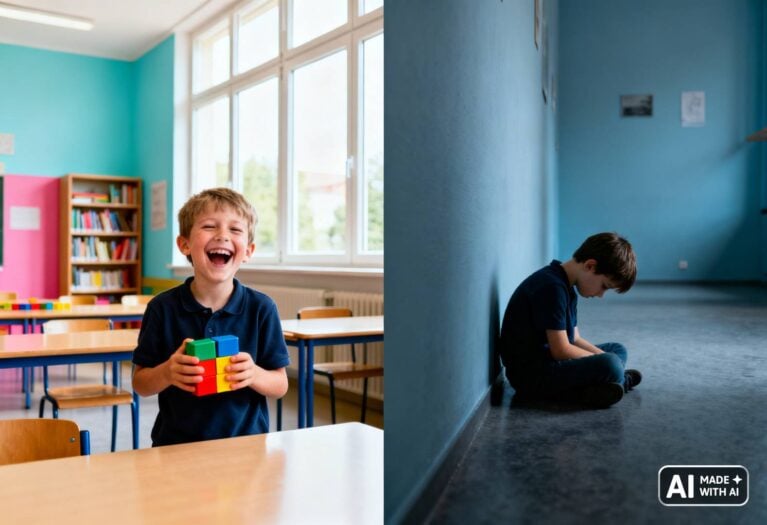
1. Sudden Changes in Behaviour
A child who was once outgoing may become quiet and withdrawn. A usually calm child may become aggressive or easily upset. Other signs include trouble sleeping, a loss of interest in activities they once enjoyed, fatigue or distraction at school, complaints of headaches or stomach aches, or a noticeable change in eating habits. In younger children, this can show as a return to earlier behaviours like bedwetting or thumb-sucking. It is not necessarily any single change that signals concern, it is when several changes appear together, or when something feels different about a child, that the pattern deserves attention.
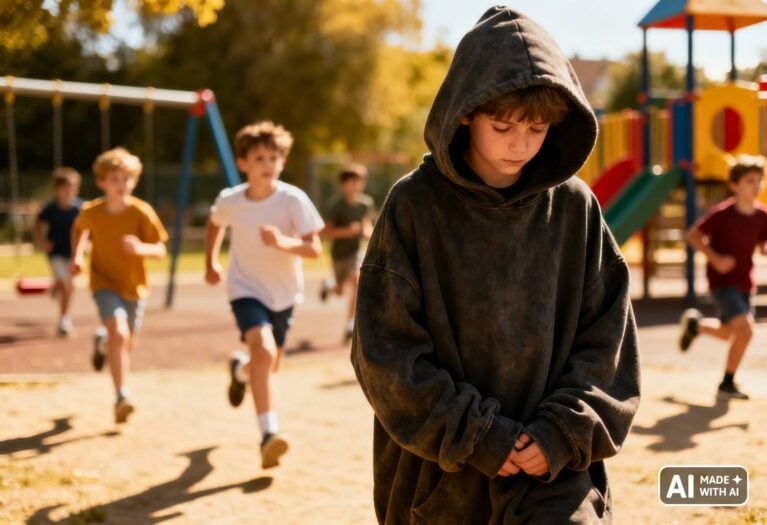
2. Unexplained Injuries
Physical injuries are often the most visible indicator of harm. Signs may include bruises or marks in unusual places (such as the ears, neck, or inner thighs), injuries in different stages of healing, flinching when touched, or wearing concealing clothing in warm weather. When asked about an injury, a child may seem unusually anxious, look to an adult before answering, or give an explanation that does not quite match the injury itself. Although no single injury confirms abuse, a pattern of unexplained or inconsistent injuries over time is a signal that should not be overlooked.
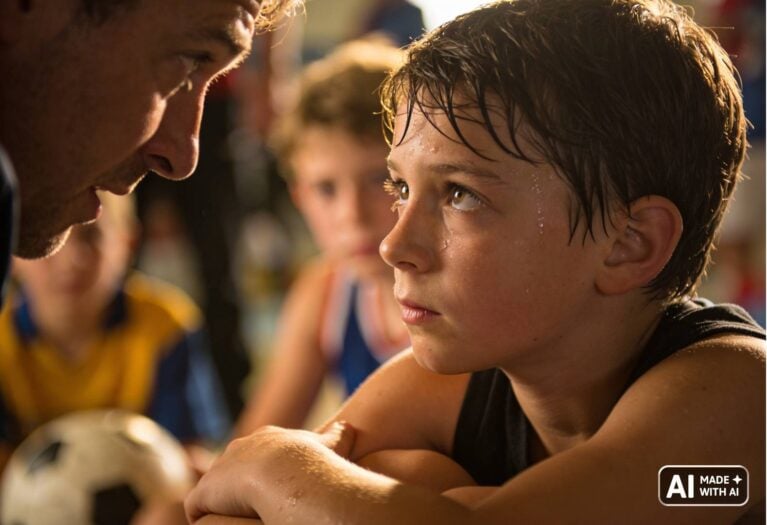
3. Always on Guard / Hypervigilant
A child living with violence may appear constantly on edge. They may startle easily at raised voices or sudden movements, seem unable to relax, or keep a close watch on the adults around them. In a classroom or sports club, they may seem more focused on reading the mood of those nearby than on the activity itself. Physical signs can include visible tension in the body, clenched fists or jaw, or faster breathing. This goes beyond general anxiety, it is a constant watchfulness, caused by the expectation that something bad may happen at any moment.

4. Fear of Going Home or of a Specific Person
A child may become visibly tense or distressed when it is time to go home, or try to delay leaving with repeated excuses. They may appear anxious at the end of the school day, seek to stay close to a teacher or another trusted adult, or avoid being left alone at pick-up time. What sets this apart from a general change in behaviour is that the fear is clearly linked to a particular place, moment, or person.
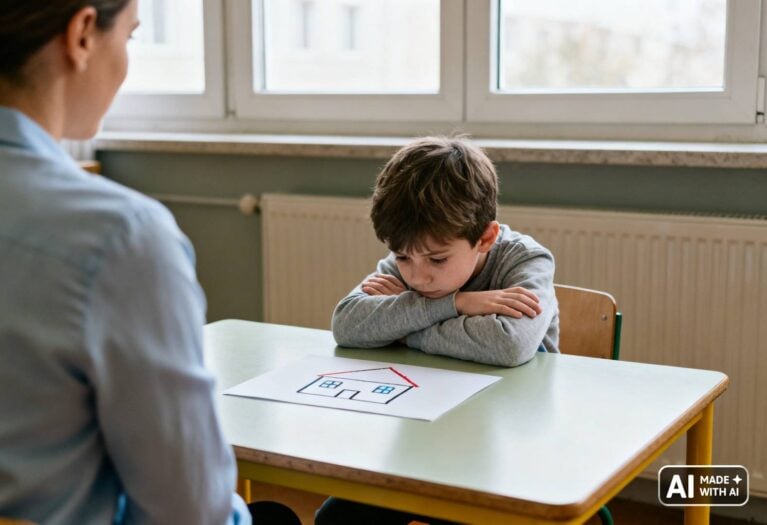
5. Difficulty Opening Up or Talking About Home
A child may become noticeably quiet, guarded, or uncomfortable when home or family life comes up. They may avoid questions, quickly change the subject, give vague answers, or seem worried about saying the wrong thing. Some children avoid eye contact or shut down emotionally when something personal is brought up. Others may react in less expected ways, such as nervous laughter, or insisting that everything at home is fine when it may not be. When this reluctance appears suddenly or alongside other signs, it may point to a child who does not feel safe enough to speak openly.
Reach Out
A single sign does not necessarily confirm a child is experiencing violence, but when several signs come together into a pattern, or when something about a child keeps concerning you, trust that instinct. Reaching out can help protect a child before the situation escalates, and before running away starts to feel like their only way out.
Children living with violence at home rarely speak up on their own. They may not have the words, they may have been told to stay silent, or they may feel responsible for protecting a parent. Sometimes, a child needs someone else to take the first step.
Starting the conversation
Click here for some tips and guidelines.
Starting the conversation
Click here for some tips and guidelines.
Choose a quiet moment, away from others. Keep it simple and open. You are not there to investigate, you are there to create a safe moment for the child to talk.
Avoid confrontational questions. Instead, consider:
“I’ve noticed you seem worried lately. I’m here if you’d like to talk.”
“You don’t have to tell me anything, but if something is bothering you, I’d like to help.”
If a child opens up, listen. Let them use their own words. Stay calm, even if what they share is difficult to hear. Don’t promise secrecy, explain that you may need to involve someone who can help, but that you will do so with their safety in mind.
If a child doesn’t open up, that’s okay. Don’t push, but let them know your door remains open. Some children need more time, or more than one moment, before they feel safe enough to talk. In the meantime, keep paying attention. And if you are unsure whether your concern is justified, don’t keep it to yourself. Talk to someone who is in a position to help, whether that is within your workplace, your community, or through the appropriate services in your country. You may not be the only one who has noticed something.

Report
Bring it to someone who can help. If you work with children in a professional capacity, this may be a safeguarding lead, a school counsellor, or a welfare officer within your organisation. If you are a family member, neighbour, or someone else concerned about a child, contact the appropriate services in your country.
Sharing a concern is not making an accusation, it is making sure a child’s situation is seen by someone with the expertise to help.
If you believe a child is in immediate danger, contact your local emergency services.
Home Should Be Safe
Available in 14 languages
Experts Consulted
The recognition points and guidance featured in this campaign were developed based on scientific research and national guidelines, and individually reviewed by experts in child psychology, pediatrics, forensic psychology, and missing persons cases across Europe. We are grateful for their valuable feedback and contributions.
Maria João M. Cosme
Clinical Psychologist at Instituto de Apoio à Criança, Portugal
Meltini Fragkioudaki
Psychologist & Project Officer at the Greek Safer Internet Center, FORTH, Greece
Prof. Fiona Gabbert
Professor of Applied Psychology & Director of the Forensic Psychology Unit, Goldsmiths, University of London, United Kingdom
Isabella Partridge
Policy and Public Affairs Officer at The Children’s Society, United Kingdom
Carlo Schippers
Former Missing Persons Expert at the Dutch National Police, Netherlands
Dr. Joana Topa
Assistant Professor & Researcher in Social Psychology, University of Maia / University of Porto, Portugal
Dr. Arine Vlieger
Pediatrician, St Antonius Hospital, Netherlands
Sources
Image Disclaimer
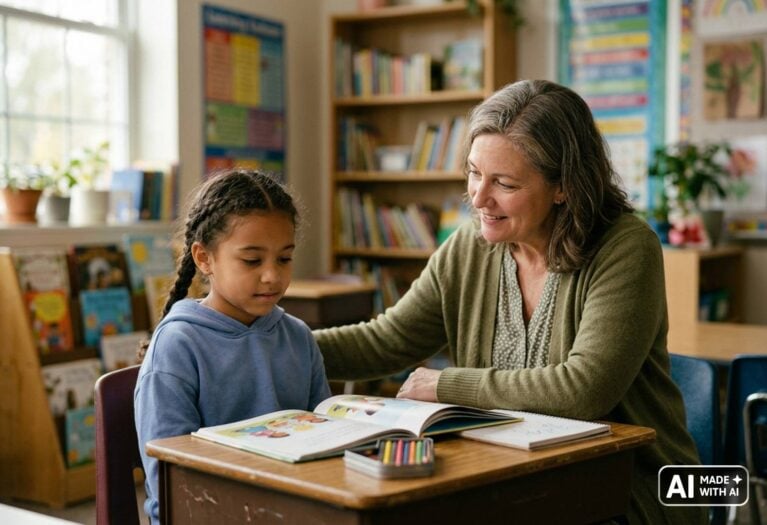
Please note that all character and situational images featured on this website are generated using Artificial Intelligence (AI). Any resemblance to real persons, living or deceased, or to actual children and specific events is entirely unintentional and coincidental. These visuals are intended for illustrative and educational purposes only, to help identify behavioral patterns and support child safety initiatives.
AMBER Alert Europe, the European Centre for Missing Children, is a pan-European foundation uniting 85 organisations across 29 countries in the mission towards zero missing children in Europe. We connect law enforcement and justice authorities, interior ministries, civil society organisations, universities, and police academies to protect children from going missing, improve the search for those who do, and address root causes through evidence-based research and best practices.